






Doctor in a white coat sitting at her desk, thinking while looking at her laptopDoctor in a white coat sitting at her desk, thinking while looking at her laptop

Patient support program (PROMs). Hear the patient. Understand the outcomes.

Capture patient-reported symptoms, daily functioning and quality of life through scheduled questionnaires. From assessment planning to longitudinal follow-up, domo.health connects the patient experience with your research workflow.

Doctor in a white coat typing on a laptop in a bright office
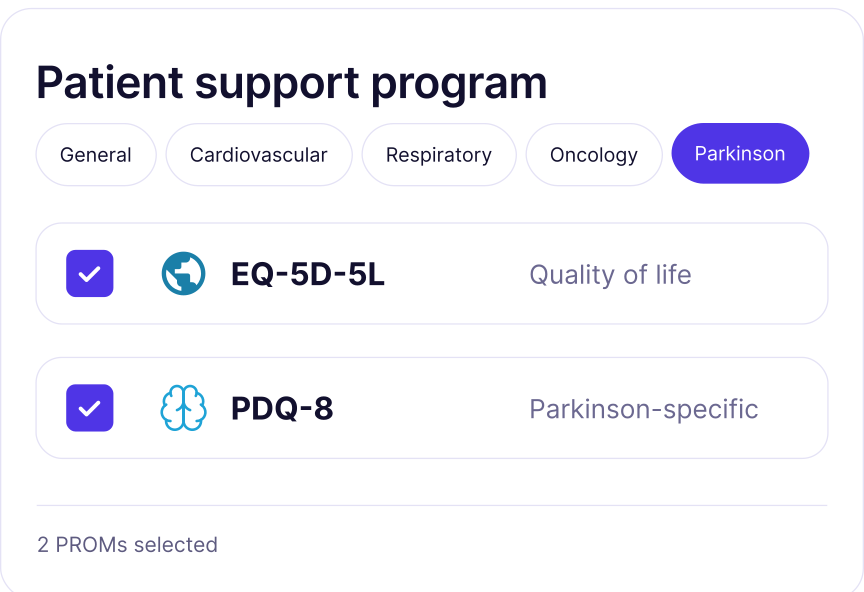
domo.health patient support programs by condition: general, cardiovascular, respiratory, oncology and Parkinson

Create a patient support program

Create a patient support program around your research objectives. Select the relevant patient-reported outcome measures to capture symptoms, daily functioning and quality of life.

  • Define your program and study population

  • Select questionnaires relevant to your 
research

  • Combine general and condition-specific PROMs

Doctor in a white coat working on a laptop at her desk
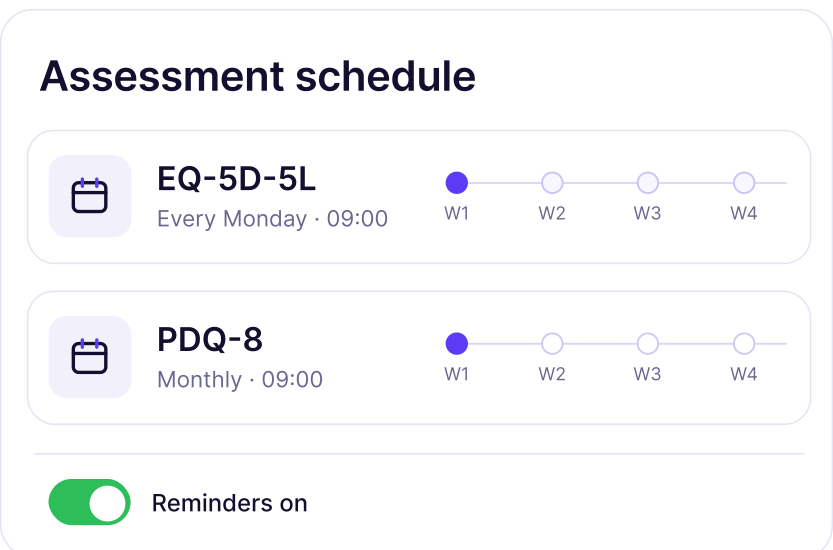
Assessment schedule: EQ-5D-5L questionnaire every Monday and PDQ-8 monthly, with reminders

Set your schedule

Define when each questionnaire reaches the patient. Set assessment schedules and reminders to support consistent data collection throughout your program.

  • Configure the frequency of each questionnaire

  • Schedule assessments across the program

  • Set patient reminders

Doctor in a white coat working on a laptop in a bright office with bookshelves
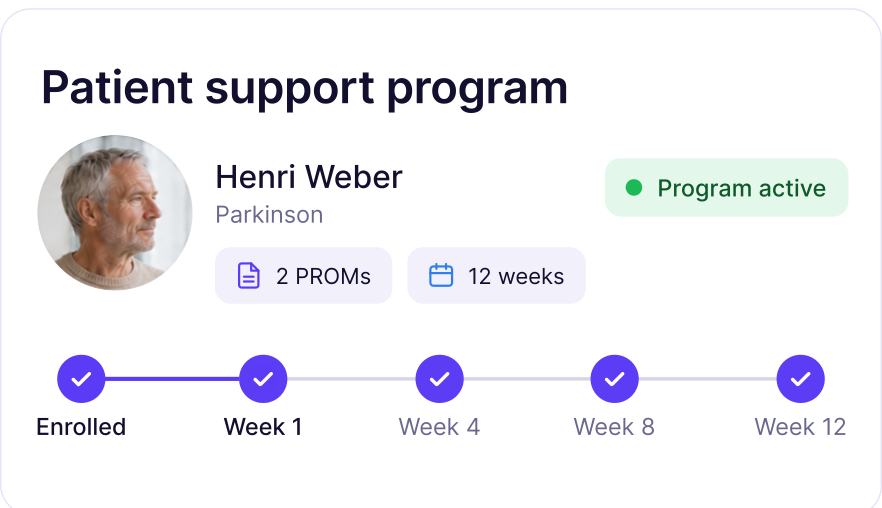
Patient support program for a patient with Parkinson's: 2 PROMs over 12 weeks, from enrolment to week 12

Enrol and launch

Enrol patients in the configured program and launch their assessment schedule. Each participant receives the planned questionnaires through the domo.health mobile app.

  • Assign patients to the program

  • Review questionnaires and schedules

  • Launch scheduled assessments

Older man smiling while using a smartphone on his living room sofa
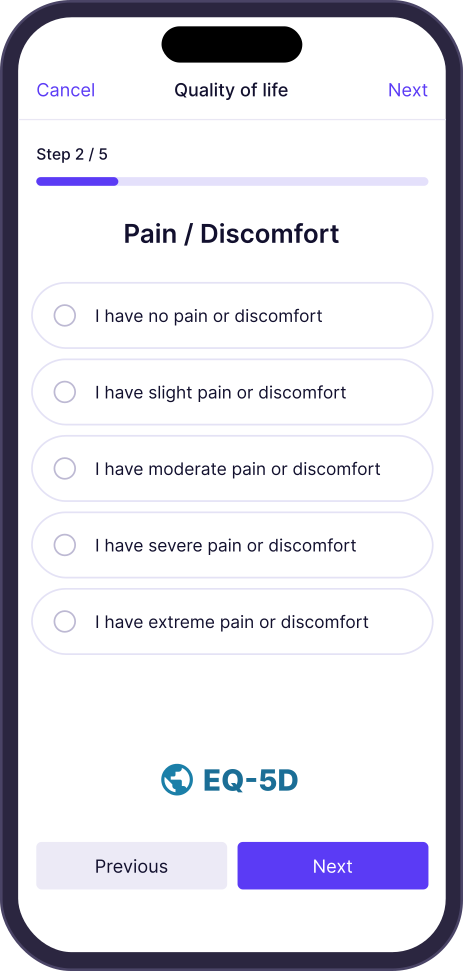
Smartphone showing step 1 of 5 of the EQ-5D quality of life questionnaire

Collect PROMs

Patients complete questionnaires directly on their phone, sharing how they feel and function in everyday life. Submitted responses become available to the research team for review.

  • Collect responses through the patient app

  • Capture symptoms, functioning and quality 
of life

  • Review newly submitted assessments

Doctor in a white coat taking notes in a notebook at her desk
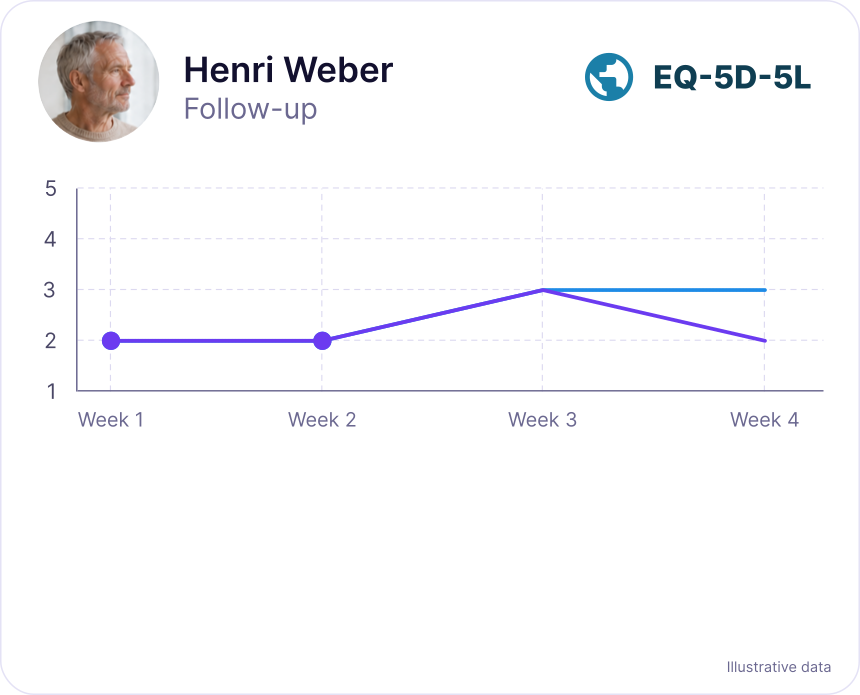
Follow-up chart of a patient's EQ-5D-5L scores from week 1 to week 4

Track and analyze

Review patient-reported outcomes over time, alongside assessment completion. Explore longitudinal responses and prepare summaries to support your research analysis and reporting.

  • Follow individual outcome trajectories

  • Review assessment completion

  • Summarize and export collected outcomes

Who is domo.health for?

Spitex/homecare teams

Collect patient-reported outcomes alongside everyday care to follow changes, inform care reviews and contribute to clinical studies when part of the programme.

On-demand
Tailored

Clinicians

Follow symptoms, function and quality of life over time, with structured patient reports that add context to consultations and follow-up.

On-demand
Tailored

Researchers

Collect longitudinal patient-reported outcomes through structured programmes, connecting everyday patient experience with clinical research.

On-demand
Tailored

Build for trust.
Every action, accountable.

Swiss data sovereignty

All patient data hosted and processed in Switzerland. Full compliance with nLPD Swiss data protection law. No data leaves Swiss infrastructure.

Built by health AI experts

Not a wrapper around a generic LLM. Every agent is designed by domo.health's in-house health AI team, combining clinical expertise with agentic architecture.

Human-first, always

Every recommendation is linked to its source. Every action requires human confirmation. The professional leads, the AI supports from the background.

A continuum of data.
Built to connect with your healthcare ecosystem.

We bring care information, clinical standards and operational systems together, creating a seamless flow of data across healthcare systems

Health data exchange

Structured information that connects homecare, clinical practice and research.

Clinical knowledge

Consistent language for nursing diagnoses, assessments and clinical information.

Medication

Medication information connected to everyday care.

Billing & accounting

Connected workflows from delivered care to billing and accounting.

Quality & information security

Structured quality management and systematic information security.

Data protection

Protection of personal data and respect for patients' rights.